Posts Tagged ‘affordability’

NZ Tax Justice Move

Saturday, December 5th, 2009

ownahouse

New Zealand is known as one of the world’s leading gimp nations when it comes to protecting the future that land in prime locations avails. They have no Land Tax. They have pathetically low council rates. Worse, these are set to penalise home construction such that the family home pays upwards of 30% more than the land banking speculator.

The kiwis haven’t even got a capital gains tax (not that we endorse that but at least the public could some share of the gains).

The gate is right open for foreign investors – no limits on foreign investments. Look at what the propertied elite say here and here.

The result – some of the most unaffordable property in the world.

Essentially they have given the big thumbs up to hammock surfing speculators and corporate REIT raiders to buy up their most valuable sites and hoard them until they can hock them for a fortune.

It really is flabbergasting.

Especially when they have been earmarked as one of the only habitable land masses in about 50 years.

But it seems that some are awakening to this giant ‘kick me’ sign the kiwi’s have given themselves with their lax tax policy. A ‘once-in-a-generation’ type Tax Review (similar to the Henry Review) has just given their findings.

Read this post highlighting some key presentations from kiwi tax experts. The slide shows are of interest, particularly the fallacies in Shaw’s (check the list of exemptions).

Arthur Grimes gives a more balanced view.

But listen to Geoff Nightingale from Price Waterhouse Coopers. Some effective lines on the justice and equity front that give one some hope that the kiwi’s are looking at deep seated reform. It seems the Tax Working Group has seen beyond the lure of a Capital Gains Tax that penalises turnover in favour of the more effective Land Tax.

However, the NZ Treasurer Bill English put a stop to the hopes of future generations with:

“Changes that are widely understood and are supported make the most difference to economic performance. Those sorts of changes tend to stick.

“Those without support simply don’t last and can’t make that much difference to our economic performance.”


At least yet another Tax Review has come out in our favour. Some good articles are out in the open and being discussed.

One day the masses will awaken to the invisible chains that high mortgages place on them due to poor tax policy.

Post to Twitter

Corporate communities voted down

Tuesday, December 1st, 2009

hillsideVlrubb

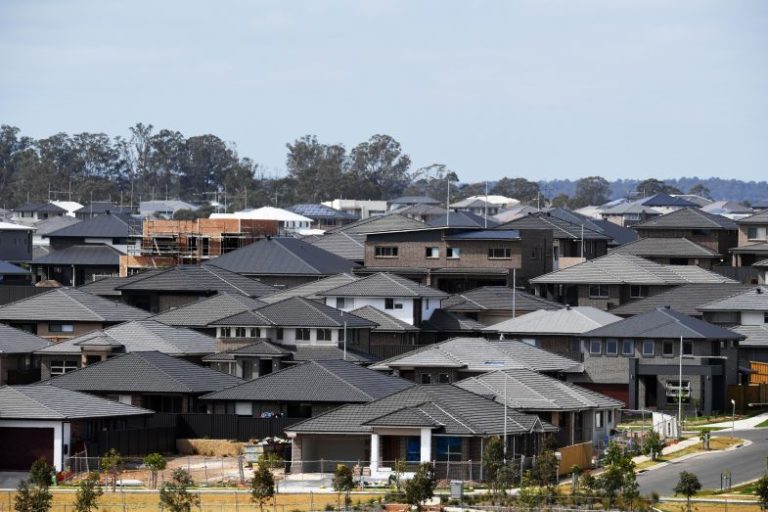
The popularity of McMansion-ville suburbs dwindles as genuine home-buyers look for communities with character in New home sales retreat: HIA

Sales of new homes in Australia dropped in October, an industry survey showed today, in a further pullback from stimulus-driven gains earlier in the year.

The Housing Industry Association said sales dropped 6 per cent in October, on top of a 4.3 per cent decline in September. That largely unwound an 11.4 per cent jump in August as people rushed to take advantage of additional first home-buyer grants.

“It is looking like 2010 will be a year where the number of new homes built will fall well short of what is required to match Australia’s rapidly growing population.”


A drive through any of these corporately designed communities will see a dearth of community hubs, clubs and information centres. This is the infrastructure that creates a community. However, any such ‘third place’ imposes a reduction of sell-able property. The profit making mantra has decided these are not worth it. However, some developers are bucking this trend.

In a carbon challenged future, the lack of public transport (and any hope of funding it under the current model) may also be impacting on buyers’ decisions.

With property prices continuing to move upwards, home buyers are instead competing for land and houses in older suburbs where the housing mix was allowed to evolve by a raft of competing builders and architects, rather than by a centrally controlled, profit making developer.

And what do we get in response? Knowledge that housing will only get more expensive as supply will be crimped next year (as Hudson warned recently).

But yet our houses are the biggest in the world:

The typical size of a new Australian home hit 215 square metres in the past financial year, up 10 per cent in a decade, according to Bureau of Statistics data compiled for Commonwealth Securities.


The answer we are looking for is in the need to break open the dominance of the big 6 developers and to open up the large land banks to everyday builders. However, our tax system ensures all the advantages lie with big companies. How?

Low land taxes allow developers to drip feed properties to market to ensure prices can be manipulated upwards. It also encourages mcmansions by under-playing the role of land in the affordability equation.

On Saturday I spent a few hours driving around Hillside, at the far end of our sprawl past Keilor, in shock and awe at the hoodwinking job going on in Melbourne. The vast majority of streets I drove down in this McMansion-ville had vacant blocks of land littering the community. So much for additional land supply as the answer for affordability! Check the flickr page to see just some of the sites.

The tax system also supports large developers and land bankers alike at the local level. CIV (capital improved valuations) council rating sees the family home paying more than the land banker, as they have no improvements/ no house to be taxed. Local governments are complicit in allowing the family home to subsidise the land banker by upwards of 30%.

One of the many other advantages for any large business is that quarterly GST can be saved up over 3 months and the interest earnt on it used to offset the costs of hiring accountants. The accountant can then spend time investigating tax loopholes to minimise the developer’s contribution to the community.

The community will continue to be duded for as long as it ignores these self imposed tax tricks.

Post to Twitter

Hudson Multimedia highlights

Tuesday, November 24th, 2009

Hudson_PA

Following Prof Michael Hudson’s recent tour, here are more multimedia highlights:

Visual:
Hudson on ABC International with Jim Middleton.
Hudson on Switzer – Sky TV Business.
Forever Blowing Bubbles – Sydney presentation.
Hudson tour slideshow

Audio:
The Earth v the Neo-Liberal Paradigm – Prosper Australia speech
Global Policy Trends in a Financialised Economy – Federal Parliament’s Vital issues seminar. Transcript available soon.
Steering the Economy into Debt Deflation – Melbourne Town Hall speech
Philip Adams Interview – Late Night Live
Debt Creation as Wealth Creation – the Renegade Economists

Written:
The Age: Housing supply down, profits up – check the comments as per the Kavanagh link at the bottom.
What recovery? – Business Spectator interview
Landlords and bankers back in charge of the economy again – Daily Reckoning commentary
Interest Rates in Whose Interest – Press Release

Post to Twitter

Rising Interest Rates in Whose Interest?

Thursday, November 5th, 2009
crunch
Creative Commons License photo credit: the|G|™


Written Oct 16th
Raising interest rates will do little to address underlying economic issues, says visiting US economist Professor Michael Hudson. “The market factoring in 7 interest rates rises spells danger for the Australian economic miracle” warns Professor Hudson.

“Governments must use tax policy rather than monetary policy to address asset bubbles. Burdening the whole economy with land price overheads penalises manufacturing by pricing the products of Australian labor out of global markets.”

“Higher interest rates will provide a windfall for arbitrageurs to borrow at about 1% abroad and lend to Australia at 3.25%. This inflow into the A$ will bid up the exchange rate. This will make Australian exports more expensive, slowing new manufacturing investment and employment while eating into export revenues across the board.”

Prof. Hudson says that “this is the same phenomenon that is happening in Canada. It represents a sacrifice of the real economy of production and consumption to the financial sector.”

“Raising interest rates will hurt government finances in three ways,” Prof. Hudson explains. “First, the government will have to pay more money to bondholders. Second, mortgagees also will see their interest payments rise. This will reduce the income they have to spend on goods and services. Markets will shrink, and so will tax revenues. Finally, the rising exchange rate will reduce business profits, reducing corporate revenue.”

“If the government really wants to slow the property bubble, the appropriate tool is fiscal policy. All they need to do is apply a windfall gains tax. This is like the excess profits tax that countries passed in times past.”

“The beneficiaries of higher interest rates are the banks, not labor and industry. Giving tax preferences to the FIRE sector (finance, insurance and real estate) rather than to industry and consumers limits the ability of economic growth to benefit most Australians. By cutting the capital gains tax below taxes on wages and business profits, the government is encouraging speculation, benefiting wealth and raising the price of property against labor. This means that consumers need to go deeper and deeper into debt to afford rising land and housing prices.”

“Rising interest rates accentuate the housing affordability crisis by rewarding speculators with negative gearing write offs whilst penalising first home owners.”

“Limiting asset bubble policy to raising interest rates makes billions of dollars for bankers in the carry trade, whilst penalising the manufacturing and export sector. Governor Stevens aggressive commentary on the likely prospect of rising interest rates shows his policy conundrum. He has indicated that speculators can make a gain on the rising A$ against foreign currencies ­and falling government bond prices. This seems a circuitous way to counter the price rise inhousing. He should look at keeping a lid on land prices via the use of a Land Tax. This tool should be incorporated into the RBA’s powers. Then it can be properly implemented without the limitations of political lobbying.”

In addition, Prof. Hudson observed, “The Treasurer’s announcement earlier this week that the government will expand its guaranteeing of mortgages shows that it has learnt little from America’s experience. Giving a public guarantee runs the danger that banks will simply give their loan officers bonuses on the number of mortgages they can write, without much care as to whether the borrowers can pay their debts or not, because the government will bail out bad loans.”

“This gives bankers the confidence to make as many loans as they want because the tax payer can always bail them out. The bonuses to bankers will continue as they load the economy down with debt. That is what Alan Greenspan called wealth creation.”

“The everyday person has been conned into believing that borrowing more and more money is the best way to get wealthy. This is the first time in history that going deeper and deeper into debt is seen as wealth creation” stated Professor Michael Hudson, touring the country warning on the epidemic of re-inflating asset bubbles.

Post to Twitter

RBA Policy Matrix

Thursday, October 1st, 2009
Totems 1
Creative Commons License photo credit: DerGuy82

The Reserve Bank of Australia’s monetary policy objective is to encourage:

(a) the stability of the currency of Australia;
(b) the maintenance of full employment in Australia; and
(c) the economic prosperity and welfare of the people of Australia.

However, in light of the strong statements made yesterday in Reserve warns on house prices, we will try to dispel some of the policy contradictions in our current two dimensional economic system:

The Reserve’s head of economic analysis, Tony Richards, said there was a risk of ”undesirably strong growth” in house prices unless construction caught up with a surge in demand.

‘When the price of housing rises, higher-income households tend to benefit at the expense of lower-income households,” he said. ”As a nation, we are not really any richer when the price of housing rises.


Let’s repeat that (and remember it) – As a nation, we are not really any richer when the price of housing rises. Rising property prices are dominated by the land component. No one person created that upkick in land prices. Why should it be privatised? That is the first issue to be recognised.

Higher income households benefit due to the capital gains that in boom years can deliver a capital gain sufficient to subsidise a lifetime’s taxes. Such households benefit disproportionately due to the the higher land value – a fixed percentage will deliver a greater nominal gain.

Infrastructure projects are more likely to be built in well to do areas. With the RBA’s stated aim of ‘the economic prosperity and welfare of the people of Australia’, this admission reflects a compromise that wealthy people can become prosperous at the expense of the poor.

Dr Richards said one reason for the housing shortfall was the difficulty and cost of developing land – typical lots on city fringes cost more than $150,000.


This is where the Policy Dilemma Matrix raises it’s head. Throughout this speech, Dr Richards mentions that supply is lower than it should be. The usual suspects are rolled out – poor state taxes, as we have often commented. Victoria’s GAIC is another one-generational slug that could be more fairly spread over the lifetime of the infrastructure provision via effective council rates (SV, not CIV).

With an October interest rate rise in need due to the property bubble, how will this effect the RBA’s policy goals? Often the RBA raises interest rates at precisely the wrong time. This could be avoided if an understanding of the role of land turnover on business cycles was incorporated.

Higher interest rates will hurt FHO’s, reducing their spending power at the local shops, leading to more business closures. Any small business with a loan will also be hurt. Higher interest rates will push our currency even higher, making exports less effective. All of these outcomes hurt the RBA’s 3 stated policy objectives.

Investor’s however, will able to use their higher interest rates to expand their negative gearing allowances.

The RBA’s policy toolbox must be expanded.
(more…)

Post to Twitter

Renters: Stop Walking on Egg Shells

Tuesday, September 1st, 2009

FHOG$50K

The paranoia many renters face trying to find a place to genuinely call home is undermined by the juggernaut of rising property prices. Why do rents outpace wages? Is the market about to turn?

It is time prospective first home owners looked beyond mainstream media to arm themselves with information crucial to the biggest decision of their lives. We believe the following series of news snippets may help in deciding upon the right time to enter the market….ie NOT now!:

RP Data reports via realestate.com.au

Weekly house rents fell by 3.5 per cent ($15), while unit rents remained resilient, recording a fall of just 0.6 per cent for the same period.

The largest falls in house rents have been recorded in Canberra, where the median weekly rent is down just over six per cent for the June ’09 quarter, falling from $530 in March ‘09 to $498 in June.

At the other end of the spectrum, the only mainland capital city to record an improvement in the median weekly rental rate was Darwin, which now has the most expensive weekly rental rate for houses of any capital city. On average, renters in Darwin are paying about $100 a week more to rent a house than someone renting in Sydney.

If ever there was a sign that a speculative bubble was still in full swing, look no further than Darwin with rents $100 above Sydney?!! With clearance rates in Melbourne at 85% last weekend, it is interesting to note that the supply of properties to market has only recently lifted above last year’s supply (having been down drastically all year). Will we see a cascade of properties hitting the market before the end of the boosted FHOG?

With yesterday’s ABS property sales data showing a 0.2% drop in the sale of new dwellings and a flat 1% increase in existing (once affordable dwellings), the property market is yet to recover. RP Data’s link above shows that property prices are now at record levels. Watch Phil Anderson on SKY news as a reminder that this is an 18 year cycle, not a month to month timeline.

Gavin Putland’s Recession’s Begin at Home report shows that for 32 out of 40 countries, there was a 8 – 9 quarter lag between a fall in property turnover to the onset of recession. That 8th quarter falls due at… the end of September. With the FHOG clouding the market, the 9th quarter looks very interesting.
(more…)

Post to Twitter

Palatial Profits

Tuesday, July 14th, 2009
Speculator - Madrid Abierto
Creative Commons License photo credit: eb0la


An interesting read in today’s Age: Palatial Spreads Kept Empty? That’s Rich

Ghost mansions and land banks are sometimes held by those planning a tennis court or swimming pool. Other people are waiting for their children to grow up. Many are speculating that the price of Toorak land will only rise.

“Some of the houses we look after, they don’t even want to rent them,” Mr Savas said. “They don’t want the hassle of a tenant.”

And that’s the rub of it. The capital gains are so great, the economic incentive to rent out the right to a roof over our head is written off. The defensive maneuver to snap up a neighbouring property is also a deft tax shelter. Titles are merged and as principle places of residence are exempt from Land Tax, the tax gain the Solomon Lew’s of the world benefit from is more per annum than what many earn in a year. This is manifested in a higher land valuation for the property.

From this comes the ability for investment loan re-financing as the leveraged value of the location increases. Thus the wealth gap. Thus the urban sprawl.

“As far as investment goes, land in Toorak is as good as you are going to get, and it’s probably the only suburb you see land banking except for in outer Melbourne.”

Talk about a defensive move by the real estate lobby – take a drive through most major new developments or any former government land sold to developers to ‘improve land supply’, and you will see vast tracts withheld to drip feed to the market such that land and housing prices are kept high.

Imagine if a restaurant could remove 1/3 of the food off it’s menu and force people to beg prices upwards? Land is the only monopoly where this can happen.

Why does the tax system actively support this?

Post to Twitter

Madden’s Economic Snubbery

Thursday, June 25th, 2009

silhouettexxx


Planning Minister Justin Madden today writes about critics exhibiting cultural snobbery towards sprawling suburbs.

He goes on to discuss the rationality behind last week’s expansion:

Releasing land for homes in Melbourne’s west and north will allow for development where there is room, but not nearly as far out as some imagine…..Cranbourne in the east is 44 kilometres from the CBD — Werribee (30 kilometres), Melton, (30 kilometres) or Craigieburn (25 kilometres) in the west are not so far away.

Fair go Minister Madden, but what about applying the same rationality to the existing land already zoned residential? Prudence would see all land zoned residential be utilised to its’ full potential. We have written a number of times about former Commonwealth land at the Braybrook RAAF base, just off Ashley St. The trend is rife through any development.

Every day I cycle down Melon St, Braybrook and see a small building team slowly infilling one block at time. Over the last two years this land has been drip fed to the market in order to maximise profits. Wouldn’t it be nice if we all had the opportunity to hold people to ransom for one of the greatest moments in their life – gaining access to the Great Australian Dream?

Or would our morals (hopefully) call our conscience into line? Why doesn’t the tax system do this for us?

This entire RAAF site was sold off to the private market in the early 2000’s. Today one can pass through the area and still see at least 30% of this land vacant. Repeat – vacant! Land banking away to year long holidays, earning profits in their sleep whilst the rest of us engage in the daily slog.

In the middle of this housing crisis we have people begging for a piece of the earth to build on, but a concoction of inefficient taxes sees it more profitable to withhold this land from supply in order to extort prices.

RIP Richard Pratt – his reputation tarnished for price fixing cardboard boxes. Meanwhile the price of land is publicly released by various property lobby groups, in effect giving land speculators the heads up on when and where to sell. Why can land (needed to meet primal human rights for a roof over our head) be manipulated for profits, but throwaway cardboard boxes can’t be? Neither should, but such is the mystery behind our economic and legal system.

Is this economic snubbery due to the dominance of lobbyocracy on political decision making? Our right to vote is undermined if we have such little influence. We need economic freedom too. Then we can do what we really want. However, if the price of housing is double the long term average, we have less for food and fun, savings and investment. The wealth gap continues as policy makers avoid the too-hard box.

Madden should be called to account for this economic snubbery, but unfortunately too many youngsters are devoid of economic know-how, such that 200,000 young people will be manipulated into buying at the wrong time by the end of the federal FHOG this September.

Why doesn’t Minister Madden campaign to eradicate land banking by removing stamp duty and increasing and flattening Land Tax? The tax free threshold for Land Tax must be removed. Every time they increase it, the price of land increases, as fundamental economic law dictates.

An affordable block of land on the Braybrook site would incur barely $300 in yearly Land Taxes and $800 in rates. The tragedy with our rating system is that the family home will be paying 30% more in council rates than the land banker (due to CIV rating on the improvements, the house component). Site Rental rating is much more efficient. The rationality of this argument cannot be shot down.

We must use land wisely. Land is for housing, not hocking.

Post to Twitter

Land Tax to Affordability

Wednesday, May 27th, 2009


Suburbs hit with land tax increase

TAXPAYERS owed more than $227 million in land tax by the end of February – a 20 per cent increase since last year, Office of State Revenue figures reveal – with a Herald investigation finding that much of the pain is being felt in the Labor Party’s backyard.

The debt rise comes after the State Government lifted land taxes by 25 per cent on properties valued above $2.25 million at the onset of the recession in November last year.

This is another sign that the NSW housing market is about to unravel. Speculators in Labor safe seats, no doubt many of them investing in formerly ‘affordable’ suburbs, have made the most of the Land Tax threshold, which starts at $368,000. This means for a $500,000 land and house property investment in Sydney, the speculative investor would owe $2112. Not much. This property advertised in Parramatta for $479,000 would owe $1904.

Soon the financial pressures will add up and these vacant and under-utilised sites will be sold. The added supply will push prices down and thus assist affordability, breathing hope into the lives of the youth.

But small business must be hurting. The Rees Government gave a signal to the market that they prefer small business over speculators by reducing Payroll Tax from Jan 1 by 0.25% to 5.75%.

To avoid this sort of scare campaign by the Property Council, the Rees Government should flatten the Land Tax and lift it so that Payroll and the regressive GST can be removed. Prime locations such as Pipers Point have a higher locational value, rendering obsolete the need for differential tax rates. This will mute government criticism for using Land Tax as a wealth tax. It should be aimed fairly at all occupiers of land as a ‘beneficiary pays’ charge. Hands up for those who want to abolish income tax? This attitude would help us move away from the casino economics mentality that dominates policy makers.

Where is the hard yakka in shuffling paper?

Post to Twitter

Land Tax Can’t be passed on to tenants

Monday, March 23rd, 2009
Hummingbird Moth
Creative Commons License photo credit: Roger Lynn

The Age today ramps up the property lobby’s annual war against contributing to society in Land tax hike to hit tenants

Knight Frank managing director Paul Burns said landlords had been complaining about their 2009 land tax bills, and agreed that tenants on net leases would be the first to cop the extra charges. But he said competition for tenants would eventually see landlords absorb the cost.

“New tenants come in and look at net rent, plus outgoings. Ultimately, it will pass on to the property owner.

Why shouldn’t landlords contribute something to government for the massive capital gains they have received over the last few years?

We agree that there should be yearly land valuations to avoid these bi-annual spats by the property lobby. It’s also fairer and can’t be too difficult in an era of modern software such as google earth.

We support a higher flatter, land tax. This will fund the removal of payroll and stamp duty taxes. This is part of the move towards supporting the productive economy and deterring speculation. Higher land taxes should be encouraged to remove the incentive for land speculation, the pressure that has pushed us all into so much debt and delivered the GFC. Without speculation, housing will be come a human right again. At present it is a speculative right.
(more…)

Post to Twitter