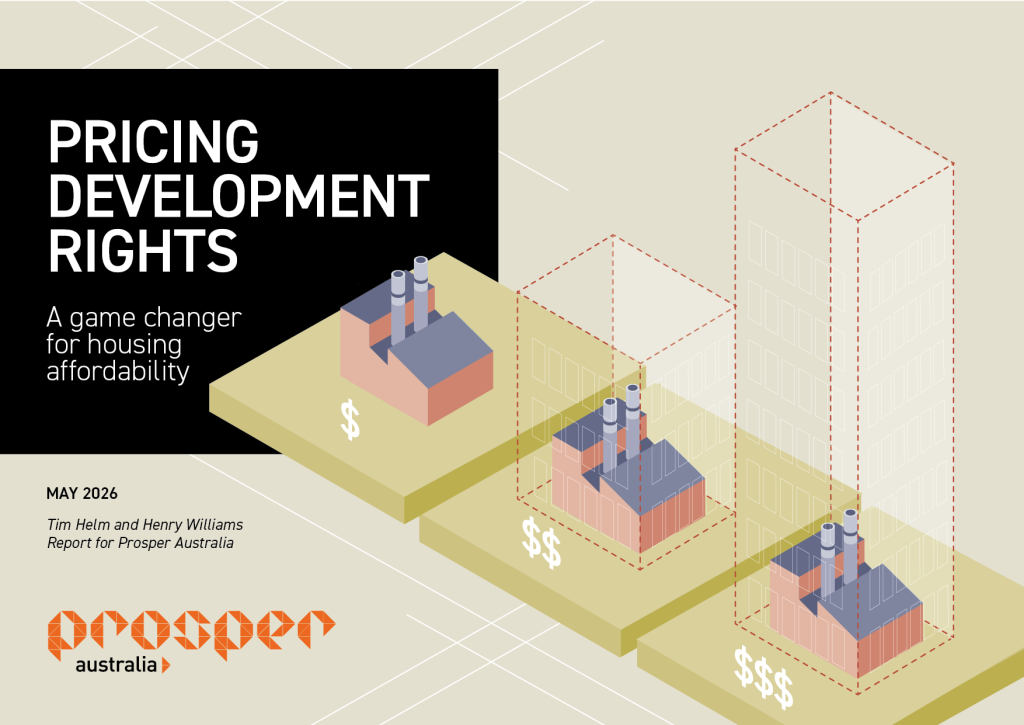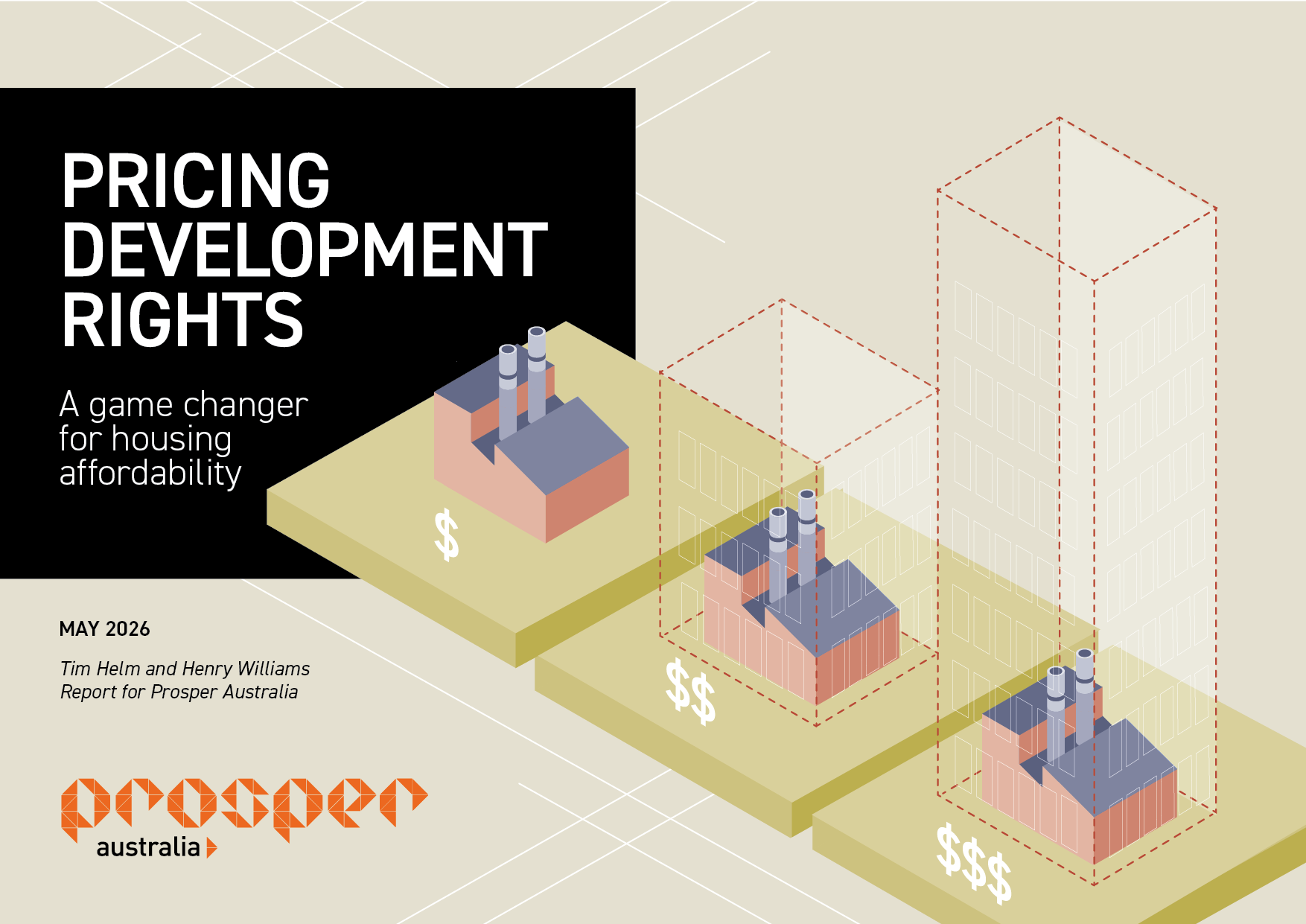
Pricing Development Rights is a major new report by Prosper Australia, which has found governments across Australia are effectively giving away $11 billion a year to wealthy landowners by failing to put a fair price on development rights.
May 2026
There is a deep unfairness at the heart of Australian housing policy. State governments, by way of their planning systems, are routinely giving away public assets worth billions of dollars each year.
Legal permission to develop land in new and more profitable ways is a valuable property right. Development rights are created by and belong to the public. When transferred to private landowners, they should be priced at their private value. Right now, most states are handing them over for free.
The result is a system of enormous windfall gains. By way of rezoning and planning permission, development rights worth an estimated $11 billion are granted to private beneficiaries each year. This silent, legalised giveaway delivers vast sums to some of Australia’s wealthiest landowners, with the public receiving nothing in return. This is plainly unjust.
Development rights are public property, held in reserve for public purposes. To transfer these to private landowners is a healthy and necessary part of economic growth and change. But the value of these rights should accrue to the public, not the private owners who happen to hold title.
This report calls for states to put a fair price on development rights. This simply means selling public assets at market value – a far better way to raise revenue than taxing productive economic activity. States should charge for development rights by adopting their own versions of the ACT’s Lease Variation Charge (LVC). The LVC is a proven and efficient model for capturing value created by the planning system (and is similar to a model operating in Singapore). The LVC is a price based on market transactions, and this price is paid by developers, not ordinary homeowners.
States should adhere to the four key design principles of the LVC:
- The charge only applies when the development right is exercised;
- The charge is paid by the developer;
- The charge captures 75% of the full uplift in land value; and
- Most charges are specified in advance, providing certainty.
Ending the current giveaway could raise significant sums of revenue, which could be used for many purposes. In particular, it could fund a major package of housing support for the ‘have-nots’ currently locked out of the market.
The estimated $8 billion raised each year could pay for the abolition of stamp duty for all first home buyers, benefiting 90,000 buyers each year, while also funding an additional 195,000 social housing dwellings, a 43% increase on the current stock.
This could be a game-changer for housing affordability – a way to close the schism in Australian society between the landed and the landless to the benefit of renters, aspiring home buyers, and people struggling to access secure housing at all.
The only losers from this reform would be the housing ‘have-lots’: major landowners extracting unearned wealth from the planning system, including professional speculators banking development-ready land for capital gain. Taking the ‘honeypot’ of windfall gains away from these players could clean up an industry rife with rent-seeking and corruption.
For any government serious about tackling housing affordability, and prepared to call time on an unjust and unjustifiable giveaway of public value, pricing development rights is an obvious and overdue reform.