
A man who spawned a movement
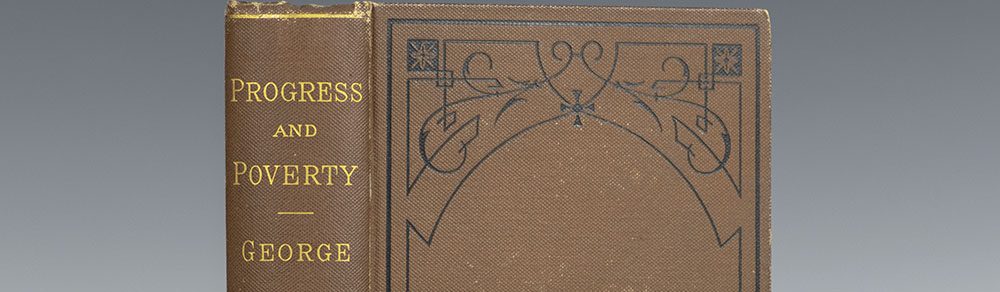
Henry George was a popular economic philosopher in the late 19th Century. His book, Progress & Poverty, stormed the world in the 1880s and asked why there was so much poverty despite the progress brought on by the Industrial Revolution?
George spelled out how land ownership laws create a pyramid society, whereby the rich get to live off the poor. His simple but evocative writing alerted people to this travesty and provided a solution: land tax.
The movement inspired by his work came to be known as Georgism.
Henry George was the first economist to demonstrate that taxes based on resources – which he called land tax – or the ‘single tax’ – produce the greatest prosperity with the least adverse effects. He demonstrated how poverty and unemployment could be minimised by the removal of all other taxes (including income tax) and replaced with the ‘single tax’.
Naturally, proposing to tax resources upset the wealthy elite, and George was bitterly opposed.
People like Albert Einstein, Alfred Deakin, and Henry Ford saw George as one of the most important intellectuals of Classical economics. He gained huge support by making economics understandable to the average person. Proof of his popularity in Australia saw some 10,000 people attend George’s inspirational speech at the Melbourne Exhibition Centre in 1890. Similar numbers followed his talks around the country. You can read more about George’s tour of Australia in this comprehensive article by Margaret Jackman.
Unfortunately, Henry George died tragically from a stroke whilst running for Mayor of New York. He was arguably at the height of his political popularity, and over 100,000 people attended his funeral. We can only imagine what achievements he could have made with a full career.
“Men like Henry George are rare, unfortunately. One cannot imagine a more beautiful combination of intellectual keenness, artistic form, and fervent love of justice.” – Albert Einstein

Henry George