
Australia has a problem: we can’t build roads, rail and schools as fast as population is growing with current government financing methods. Failing to keep up with our current needs – let alone investing for an uncertain future - puts the living standards of everyone...
BLOG: infrastructure
Andrews government funds Futbul – not people in need
The Australian Football League has bought the Docklands Stadium freehold asset that cost $460m to build in 2000 from the Andrews ALP Victorian government for $200m - allegedly to assist “tenant clubs struggling under onerous deals to play at the roofed venue.” In nine...
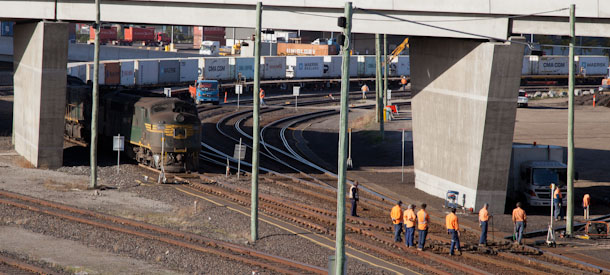
Rail crossing removal makes me cross – do it properly!
The next rail crossing to be removed by the Victorian Government’s Level Crossing Removal Authority is at Grange Road, Alphington. It is asking locals whether they would prefer a sky bridge over or a concrete trench under. The good residents of Alphington are being...
The Andrews government underground gift to wealthy landholders
Victorian taxpayers were kicked in the teeth yesterday by Public Transport Minister Jacinta Allen, who announced city landholders would not have to contribute to the $10.9 billion Metro Rail project, though they will enjoy substantial and certain land prices rises...
Cheap housing is good for business!
by Dr Gavin Putland reposted from grputland.com If you want to expand your business, you probably need to hire people. But you can't hire them unless they can afford to pay for housing within commuting distance of your business premises, out of wages that you can...
Perverse incentives from dud taxes dog public infrastructure investment
Melbourne Domain Sunday went into shock and horror over the impact a proposed elevated rail would have on the selling prices of adjoining Carnegie properties. Area agents say the value of houses backing onto the rail line from Carnegie to Hughesdale could be slashed...
Do we at last have an Infrastructure Prime Minister?
Over the weekend, Prime Minister Malcolm Turnbull delighting Queensland Premier Annastacia Palaszczuk by announcing a federal contribution of $95 million for the Gold Coast light rail project. Journalists have leapt on this new policy stance, different from the...

Victoria to cap the single best tax base available
The Andrews government is capping local governments rate rises to CPI after fifteen years of six per cent rises in a low inflation environment. Minister for Local Government Natalie Hutchins’ Fair Go Rates System, administered by the Essential Services Commission,...
12km of cost-shifting – onto working stiffs like you
The Property Council of Australia was out again yesterday, sternly defending the land from pesky taxes and ‘value capture’. Well, their land. The ACT branch said its members "applaud the ACT government's vision" for the 12-kilometre tram linking the city and...

The valuation conundrum – not.
By Bryan Kavanagh and David Collyer This week’s game-changer, the Property Taxes paper by Grattan Institute has a minor error on land valuation that needs correcting before it becomes a gift to the opponents of reform. Grattan is acutely aware that on this topic they...