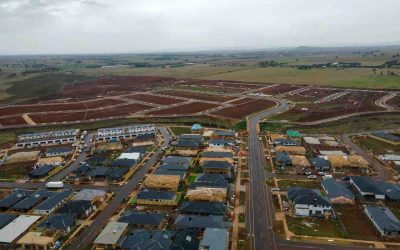
Our film Real Estate 4 Ransom is now available online
Real Estate 4 Ransom from Real Estate 4 Ransom on Vimeo.
Topics: Multimedia Tags: housing affordability, Karl Fitzgerald, Real Estate 4 Ransom film, Speculative vacancies, tax reform
Posted on Thursday, March 15th, 2012
Author: Karl Fitzgerald
Real Estate 4 Ransom from Real Estate 4 Ransom on Vimeo.
Topics: Commentary Tags: a running list of warnings, affordability, boom-bust, David Collyer, housing affordability, speculation
Posted on Tuesday, March 13th, 2012
Author: David Collyer
Most of the touts working in RE sales would be unemployable without this deep flaw in the system, and they know it.
In the share market, up-to-the-second price and volume data is available to everyone. Meanwhile, the land market – bigger, deeper and more important in every way – is totally ‘gamed’ by spruikers spouting charming but misleading anecdotes and snippets of information, merely to foster ‘confidence’ and keep the mammoth Ponzi scheme going – even in a falling market.
Let me show you how.
A month ago, the Herald Sun wrote about price falls in Melbourne:
“House prices in South Yarra, Hawthorn East and Malvern East have fallen 28 to 38 per cent.
“More affordable areas including Bayswater, Braybrook, Croydon North and Macleod have also been hit hard, with median price falls of 23 to 27 per cent.
The Herald Sun helpfully shows price changes in 10 selected suburbs in prestige, middle, modest and budget price ranges.
Just a moment. 28 of the forty suburbs listed had less than 30 sales in the quarter. The REIV deliberately gave the Herald Sun statistically unreliable statistics.
We are offered the tiny statistical area Heidelberg Heights, rather than statistically significant Heidelberg; Watsonia North rather than Watsonia; Fawkner not Coburg; Donvale not Doncaster; Oak Park not Glenroy; Caulfield South not Caulfield.
Why? Because it is deniable. The big price shifts can be attributed to small statistical samples rather than the real reason: Melbourne-wide price falls. The RE machine is kicking the can down the road hoping against hope prices will bottom and they can move to a new narrative, that of ‘bargains’ bought and gains pocketed.
You may think this assessment harsh. Let me give you another example.
On news.com.au today RP Data’s Cameron Kusher is out with the Ten Worst Hit Areas – the biggest falls in median house prices in 2011, with flood-damaged Ipswich suburb North Booval the most discounted at -46.3 per cent to $154,000.
What a relief! Floods caused the worst price fall. (Letting developers subdivide flood-prone areas makes my blood boil, but that is a subject for another time.)
Also in RP Data’s Ten are Mittagong NSW, Jolimont WA, Carey Bay NSW, St Kilda West Vic, Port Augusta SA, Golden Beach, Rainbow Beach, Acacia Ridge and Eagle Farm all QLD.
Jolimont WA has a population of 1007 and shares the 6014 postcode with Floreat, Floreat Forum and Wembley.
Postcode 2283 has 9369 dwellings and Carey Bay (-42.6%) is one of 15 place names in the postcode.
St Kilda West is a narrow sliver of about 1500 dwellings North West of St Kilda.
Get the picture? Tiny samples make for deniable statistics.
In some ways, the data providers are quite accurate: house prices in these areas have fallen 40 per cent plus. They probably fell a little more than the wider postcode areas. I say the differences are very minor and point to widespread corrections – after all, home buyers would happily shift their interest across one suburb for a 40 per cent saving. The private data collectors aren’t telling. When the accurate ABS data arrives 7 months late, the house price story will have already moved on. Or down.
Topics: Articles Tags: canberra, economic rent, fred harrison, Henry review, resource rentals, tax reform, wealth gap
Posted on Tuesday, March 6th, 2012
Author: Philip Soos
Philip Soos’ latest withering attack on privilege from The Conversation today. 
Over the last year or so, the Occupy movement has garnered wide attention, with people of all backgrounds gathering to protest the deteriorating social conditions.
However, these grievances have been running for decades. The bottom 80% of US income earners have seen their wages decline (adjusted for inflation) since 1973. The median household under the Bush and Obama administrations also saw their real incomes decline as well. On the other hand, the rich (or 1%) has managed to increase their share of incomes and wealth over the decades.
In Australia, waning social democratic policies have ensured an economic assault against the public by political and economic elites has not had the same deleterious impact on equality that exists in the US.
Nevertheless, the wealthy have certainly become relatively richer than the rest of us. Our own 99% movement, while smaller than those in the US, has highlighted that all is not well in our “lucky country”.
As some may retort, isn’t progressive taxation and the social welfare state supposed to even out the social and economic inequalities in Australia? While the tax and transfer system redistributes wealth and income from the relatively wealthy to the middle and working class, the rich still appear to be racing ahead.
The reason why the rich are rich is primarily due to one factor: rent. This is an economic term to define the excess of market prices and income over the prevailing cost of production. It has also been defined as “unearned income” – income or revenue over and above what would exist under competitive market conditions. Those who make their living off economic rent are called rentiers.
Far from eliminating or taxing away this unearned income, so-called neoliberal policies are designed to create as much rent as possible for the rich to feed upon. The term “neoliberal” itself has two problems: it is not new and has little to do with economic liberalisation. These policies have been embedded in all modern economies.
I will briefly cover some of the ways that the rich become ever wealthier.
Land
Possibly the worst of the policies concerns the land market. UK economist Fred Harrison – who has predicted housing bubbles years in advance in Australia, the US and UK – authored a book called Ricardo’s Law: House Prices and the Tax Clawback Scam to explain how the rich feed off this market.
Using economic and historical evidence, Harrison showed that the wealthy do not pay a single cent in tax because they manage to claw back decades of progressive taxes through the uplift in land values of their property holdings.
The way this is achieved is twofold. Taxpayer-funded infrastructure – whether highways, public libraries, transport, schools and so forth – has the effect of raising land values, though the owner has done nothing to earn it (outside of property improvements). This disproportionately benefits those who own the most land – the top 10% of households own 38% of all net property wealth and 45% of all wealth in Australia.
The second is through the boom-bust housing cycle that has afflicted economies over the centuries. The speculative pyramid schemes result in colossal increases in land values – capital gains – that owners have not done anything to earn.
Our own Ponzi scheme has seen the land market in Australia rapidly increase from $1.2 trillion in 1996, peaking at $4.1 trillion in 2010. As Harrison points out, this process allows the rich to recoup all taxes and more, whereas those with no land holdings get jack squat. Even as bubbles deflate, Harrison notes they simply make up their lost wealth with the next bubble, which is typically larger than the last.The optimal method of stifling or preventing housing bubbles it to place substantial taxes upon land. Land is not like capital; nobody has created it, taxing does not reduce supply and land cannot move to a tax-free haven.
Taxes on land and natural resources distort the economy far less than the 125 burdensome taxes placed upon productive business and labour. Our tax system leads to deadweight losses of approximately 30 cents to the dollar (or $100 billion per year in Australia). It has been shown that land taxes can replace all business and personal income taxes.
Mining and super profits
The super profits that accrue to mining companies by selling sub-soil or natural resources, making their owners and managers fabulously wealthy in the process, are another form of rent, similar to land. There is no natural law that makes Gina Rinehart and Andrew Forrest billionaires from resources they have recovered through mining, but did not create.
Intellectual property rights
Intellectual property rights (IPRs) – patents, copyrights and trademarks – are another policy favored by the rentier class. The super-profits inherent in this form of medieval government monopoly ensure a torrent of wealth redistribution upwards to the rich, even though far better mechanisms for financing R&D and creative art exist. This is how Bill Gates became the world’s richest person – “entrepreneur”, “self-made”, “business wonder” – from government monopoly.
Remuneration
The enormous compensation and pay packages for the executives and managers of corporations is a pure form of rent, having nothing to do with the necessary cost of doing business. Conventional economists defend this on the basis that markets ensure incomes equal productivity.
One may ask what the productivity of the most highly paid managers in the FIRE sector (finance, insurance and real estate) is. After all, they pay themselves millions for having bankrupted billion-dollar firms and have driven trillion-dollar economies off the cliff. These corporate pay packages have nothing to do with attracting and retaining talent but rather rentiers enriching themselves at our expense.
Inherited wealth
Another method favoured by the rentier class is transferring wealth through inheritance, where a few fortunate children are made rich by been born to wealthy parents. It is essentially winning the lotto without ever having purchased a ticket. Wealth through inheritance is great for the 1%, but the rest of us in the 99% actually have to work for a living.
For those who believe in the phrase “there is no such thing as a free lunch”, reality shows otherwise. Not only have the rich in Australia being receiving a free lunch, government policy has created an overflowing banquet for them to feast upon each and every day.
Millionaires, billionaires and their supporters prefer to delude themselves into believing they have earned their wealth; rather, policy ensures that the nanny state will always cater to the needs of the 1%.
While some of the policies that benefit the rentier class have been discussed in the media, others have remained hidden from view. Treasurer Wayne Swan has spoken out against the rentier class, but this is rank hypocrisy; ALP policy has been decidedly neoliberal, feeding the wealth of those he condemns in his article in The Monthly.
If the 99% are serious about dealing with inequality and the social problems it causes, then it is high time to move the debate past progressive taxation and social welfare and onto the issue of eliminating rent from our economy.
Topics: Commentary
Posted on Friday, March 2nd, 2012
Author: Karl Fitzgerald
Treasurer Wayne Swan has posed a challenging question to Australian society with his piece in The Monthly, asking ‘are we willing to allow the elite to control our economic policy, democratic processes and now our freedom of the press?’ A battle is underway to avert the kind of inequality that the USA endures.
In his commentary he fails to discuss the privilege of the 0.01% to plunder the common-wealth. That is where their real advantage lies and why the tax system should act to re-balance these natural advantages inherent in the private ownership of such valuable resources.
After all – has the local baker been able to increase his prices 900% over the last decade like the Iron Ore magnates have? The scarcity rents that have allowed the Rinehart’s of the world to benefit from these higher prices result from absolutely no additional effort on behalf of the owners. This is unearned income and should be taxed away as part of every Australian’s birth right. This money should be used to fund a serious reduction in the corporate tax rate.
The 0.01 Per Cent: The Rising Influence of Vested Interests in Australia
by Wayne SwanThe rising influence of vested interests is threatening Australia’s egalitarian social contract.
…
Australia’s fair go is today under threat from a new source. To be blunt, the rising power of vested interests is undermining our equality and threatening our democracy. We see this most obviously in the ferocious and highly misleading campaigns waged in recent years against resource taxation reforms and the pricing of carbon pollution. The infamous billionaires’ protest against the mining tax would have been laughed out of town in the Australia I grew up in, and yet it received a wide and favourable reception two years ago. A handful of vested interests that have pocketed a disproportionate share of the nation’s economic success now feel they have a right to shape Australia’s future to satisfy their own self-interest.
So I write this essay to make a simple point: if we don’t grow together economically, our community will grow apart.
…
The catchcry of Wall Street’s Zuccotti Park and the Occupy movement, ‘We are the 99%’, has shone a spotlight on the top 1%. Between 1979 and 2007 in the US, the top 1% saw their after-tax incomes rise 275%, while the middle two thirds saw their after-tax incomes increase by less than 40%.
Investment income is a strong driver of this concentrated privilege, with Forbes finding the top 0.1% net over half of all capital gains in the US.
Read the full article in The Monthly
Topics: Past Events Tags: economic theory, Phil Anderson
Posted on Wednesday, February 29th, 2012
Author: Karl Fitzgerald
Tues March 6th, 6.30pm
Phil Anderson
Prosper Rooms
1/27 Hardware Lane, Melbourne
Forecaster Phil Anderson will give reasoning to why we are about to enter a bigger real estate boom bust cycle than the one we have just passed through.
Phil will talk about where we are in the current cycle, why we can know this, and what will happen for 2012 and beyond.
Mr Anderson is the author of the highly regarded The Secret of Real Estate & Banking and tours the world giving presentations to investors.
Phil always forces us to question our insights and delivers with a raft of indices to back his sometimes controversial views. The power of the mining boom, the role of superannuation funds and lure of real estate will bring some challenging conclusions.
Give a quick RSVP for catering purposes
$5 suggested contribution
Topics: Commentary
Posted on Monday, February 27th, 2012
Author: Karl Fitzgerald
After over a decade of tireless work, our office manager, Anne Schmid is retiring. We have advertised the job as follows:
Office Manager
Employer: Prosper Australia
Work Type/s: Part Time
Location: Melbourne
Prosper Australia is a lobby group with a long history in advocating a fairer tax system.
We are looking for a part-time office manager who will be responsible for organising the office’s administration, communications and day to day financial affairs. Prosper Australia currently employs three other staff who work independently at this centrally located city office.
The position is suitable for someone with competence in office management, computer programs including Word, email and MYOB.
Applications close: 09 March, 2012.
Topics: Press Releases Tags: a running list of warnings, boom-bust, David Collyer, Don't Buy Now!, Home Buyer's Strike, housing, housing affordability
Posted on Thursday, February 23rd, 2012
Author: David Collyer
23 February 2012
• Potential First Home Buyers wary of commitment
• Volume of stock for sale a swollen flood
• Consumers dis-leverage Australia-wide
• Banks unwilling to finance credit creation
Prosper Australia predicts substantial house price falls this calendar year across Australia as the mismatch between supply and demand worsens.
“Current economic settings will not support current house prices,” Prosper Australia Campaign Manager David Collyer warned today. “It is difficult to foresee anything that could derail the current downward trend – a trend we see accelerating strongly.
“Young adults excluded from home ownership have accepted their status. In a substantial negative for future prices, they are no longer pressing their noses against the window. It will take a major price adjustment to reconnect them to The Great Australian Dream.
“SQM Research shows 368,510 properties available for sale around the country – a very big lump to digest. Further, the pile is set to grow as disenchanted negative gearers exit this failed strategy in disgust.
“The Household Savings Ratio ABS 5206.0 has risen to 10.1%, reflecting a grim determination to purge interest bearing debt.
Australian banks are not expanding their lending. They need to reduce their dependence on overseas borrowings and are rationing credit.
ANZ CEO Mike Smith last week said: “There will not be a return to the level of credit growth that banks experienced pre-crisis for the foreseeable future… as consumers reduce their gearing and businesses pace investments.”
“The RBA is gradually, cautiously lowering interest rates. It is extremely sensitive to suggestions its activities may hasten or brake the deflating housing bubble. The other obvious tool available to government, a First Home Buyers Grant, has been utterly discredited,” Collyer said.
“We expect property prices to wilt under these combined pressures, with prices at end December 2012 between 15 and 20 per cent less than today. We renew and repeat our warning to potential home buyers to stay out of the property market. Falling prices erase equity while buyers’ mortgage liabilities remain payable in full.
“Don’t Buy Now!” Collyer concluded.
Media contact: David Collyer david.collyer@prosper.org.au
About Prosper: Prosper Australia is a tax reform lobby group and think tank that is now 120 years old. It seeks to move the base of government revenues from taxing individuals and enterprise to capturing the economic rents of the natural endowment, notably through Land Value Tax and Mining Tax.
Topics: Letters to the Editor
Posted on Thursday, February 2nd, 2012
Author: Karl Fitzgerald
27/01/2012
Letter to the editor
The Age
How are the real estate spruikers going to explain away Melbourne’s reported rental vacancy rate of 4.4% (“Melbourne Full of Empty Homes” Age 26/1/12)? Developer lobbyists were crying for new land releases when vacancy rates were low to provide affordable (read “isolated and without infrastructure”) housing, so what’s the team line now?
As reported vacancy rates exclude empty homes not on the rental market, it’s anyone’s guess what the real rate is. Ken Henry’s tax review called for a proper land tax to force empty homes onto the market, but as long as homes are viewed as an investment opportunity rather than a place to live then a land tax isn’t going to happen.
Karl Williams, Tecoma
Topics: Articles Tags: David Collyer, economic rent, Henry review, tax reform, Ted Baillieu
Posted on Wednesday, February 1st, 2012
Author: David Collyer
Citizens retreat confused when talk turns to Economic Rents.
The taxi industry is an excellent example of how assets granted by government create economic rents – at the expense of the wider community.
There are 5181 taxi licences in Victoria, of which the Department of Transport’s Victorian Taxi Directorate leases about 1100 licences to operators each year, making more than $11 million or around $10,000 per license per year.
The state’s remaining taxi licences are privately owned and pay an annual fee of $500 for the right. Those licenses are extremely valuable. The taxi directorate advises on their website the average sale price of a Melbourne license last year was $484,250.
That’s right, a taxi license is more expensive than a house. The value is supported by scarcity as government resists letting license supply exceed taxi customer demand.
This valuable asset is the capitalized difference between fares collected and the cost of running a cab – wages, fuel, vehicle, insurance, the network service provider and government charges.
The 4,000-odd privately owned licenses are therefore worth some $1.93 billion.
For a taxi license to sell on the open market for half a million dollars, it must be generating very substantial profits.
Generating top returns takes a level of skill and judgement managing staff, rosters and the vehicle. This, however, is a return to labor, not to the asset.
The annual value – the ‘economic rent’ – of licenses can be determined from leasing costs. Indeed, 70 per cent of licenses are leased to operators for around $30,000 per year, a price to earnings ratio of 16.
Nice. Especially nice as these assets were issued for free and carry a minimal annual charge.
So, a monopoly privilege granted by government is generating very substantial windfall gains for narrow private interests. Sadly, the Australian economy is riddled with economic rents like this one. They are the perfect base for government revenues – not taxing wages or wickedly expecting business to serve as un-paid government tax collectors.
The solution is quite simple, as the Taxi Industry Inquiry led by Professor Alan Fels is now considering: Raise the annual registration fee for taxi licenses to, say, $25,000 a year, returning some $118 million ($129m less the existing $11m state leases) to the Victorian Treasury to fund tax cuts elsewhere.
This would be tough for the licence holders, but they are free riding on the backs of long-suffering taxi users. Remember, those licenses were issued without charge and the government is absolutely entitled to change the rules around such a gift at any time.
The Australia’s Future Tax System report has a smorgasbord of state-based regressive, behavior-distorting, expensive to collect and just plain mean taxes that ought to go. No doubt there are many opportunities to cut taxes on swinging voters in marginal seats.
Knock yourself out, Premier Baillieu!
Topics: Commentary, Past Events
Posted on Wednesday, February 1st, 2012
Author: Karl Fitzgerald
Saturday 11th February
10.15 for a 10.30 start. Conclude by 4pm
Prosper Rooms, Lvl 1/ 27 Hardware Lane, Melb
Facilitator: Raymond Makewell
A Georgist seminar on the principles of economics as if society mattered. How is wealth produced? Is economics to ensure growth or to balance our rights on planet earth with the need to reward entrepreneurial risk?
Something is fundamentally wrong with our economic system. We are confident this seminar will equip you with the analytical tools to read between the lines of policy outcomes.
Facilitator Mr Raymond Makewell is an author, researcher and Executive member of Association for Good Government Sydney. His presentation will be based on their tried and true formula of presenting economics to people seeking social justice.
RSVP pls or 96702754
$5 donation towards lunch appreciated.